The National Gallery of Ireland is one of the country’s most important cultural landmarks, hosting a collection that traces the evolution of European and Irish art from the middle ages to the contemporary era.
This building is located in the heart of Dublin, in the Merrion Square West and it has two entrances, named “Merrion Square entrance” and “Millennium Wing entrance”.
Its exhibition guides visitors through various historical periods, providing insights into how social, political and technological changes have influenced artist productions.
Following the chambers’ numbers on the map provided at the reception from the Merrion Square entrance that we followed, the museum starts with exhibitions of artists such as Monet, Renoir, Morisot, Bonnard, Nolde and Picasso, representing European art between 1850 and 1950.
During this period, Paris became the primary center of Western art, attracting artists from all over Europe who were eager to engage with new ideas and move beyond traditional academic rules.
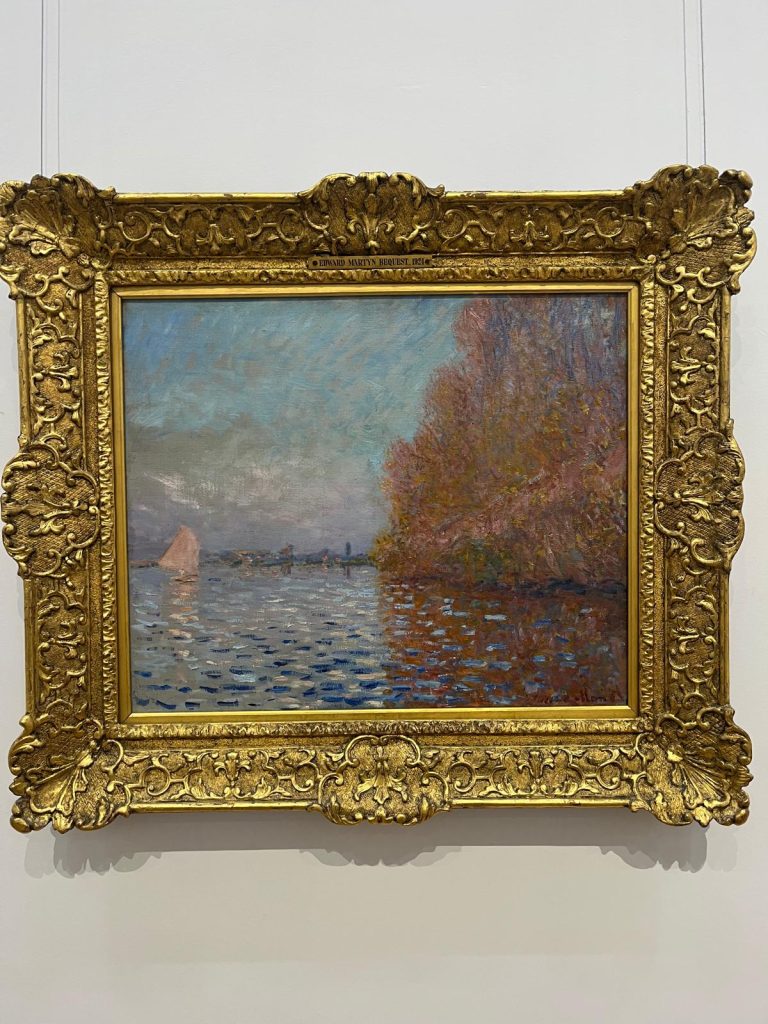
Among the many works, the paintings that amused us the most were ”Argenteuil Basin with a Single Sailboat” by Claude Monet which captures a moment of light, atmosphere and everyday life along the Seine river, a key aim of impressionism.
We were captured by the pail colors, the techniques that the artist used to represent the motion of the river and the use of the light which brings the portrait to life.
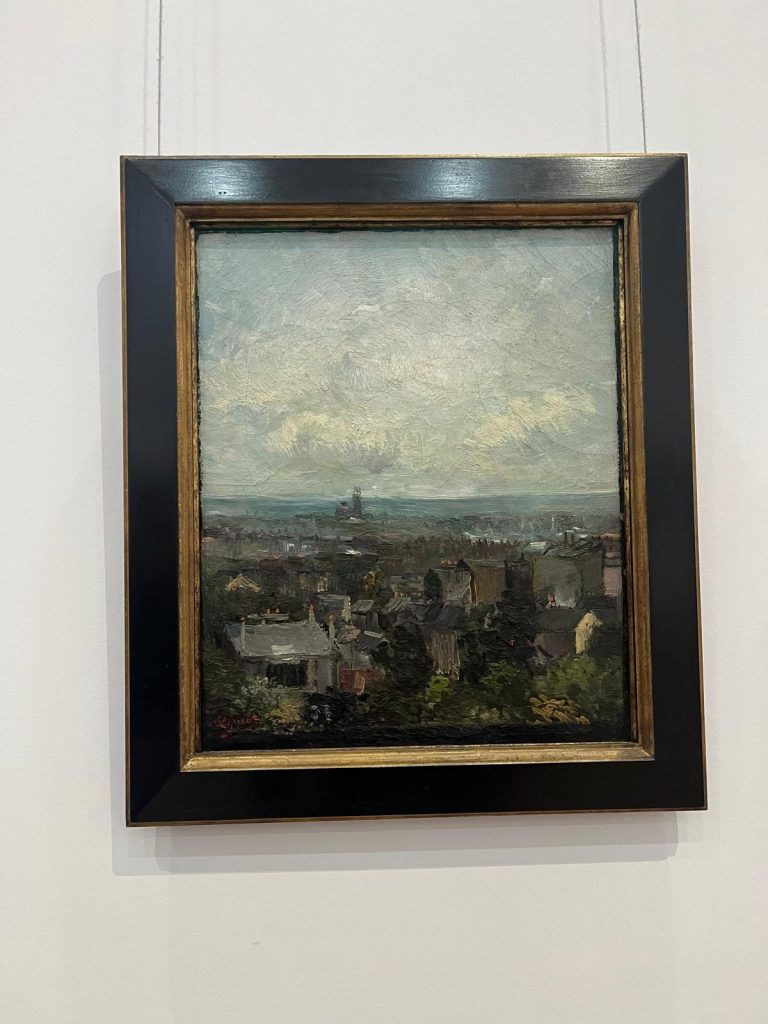
Another work that struck us the most was Vincent Van Gogh’s “Rooftops in Paris,” which uses intense colors and bold brushstrokes to transform a simple urban landscape into a scene full of energy and depth. For us this technique leads the viewer to experience the scene represented in first person.
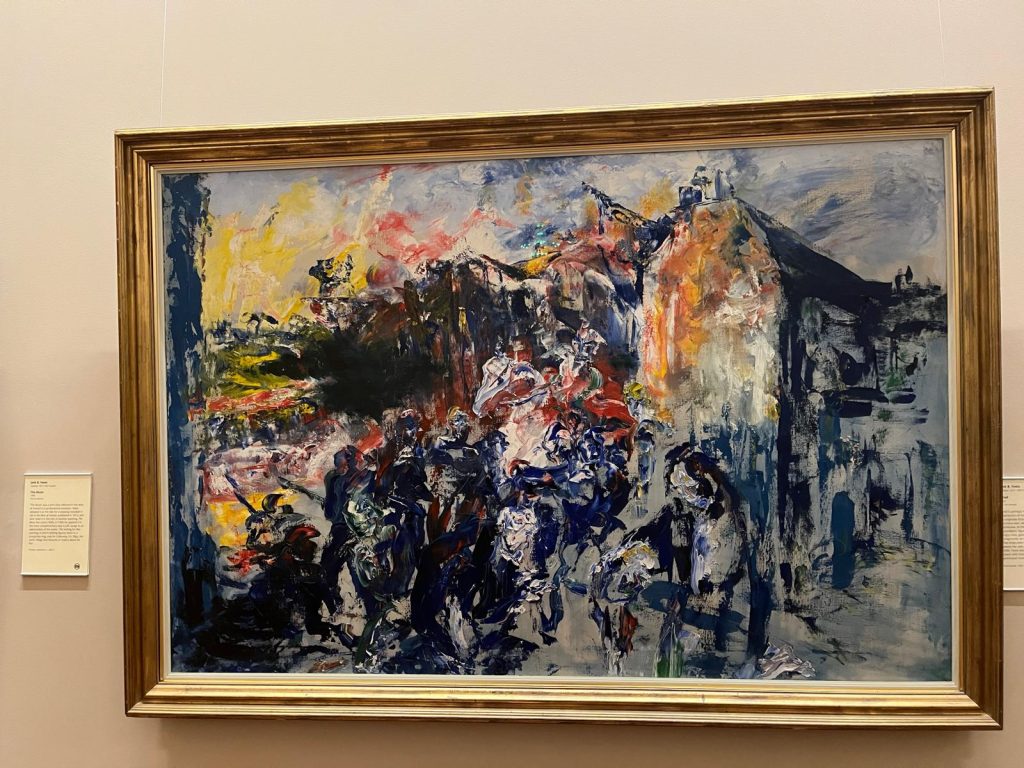
Continuing the visit, you encounter rooms dedicated to Irish artists, including Jack B. Yeats, a painter known for his depictions of natural, rural, and urban landscapes linked to everyday Irish life. However, his art is not limited to describing the land; it also addresses the themes of pain and suffering caused by the conflicts that marked Ireland between 1800 and 1900. The work “Grief” is a significant example, as it manages to convey a profound sense of loss and tragedy with great intensity.
Throughout the museum’s various rooms, there are not only paintings and statues but also a room dedicated to mosaics.
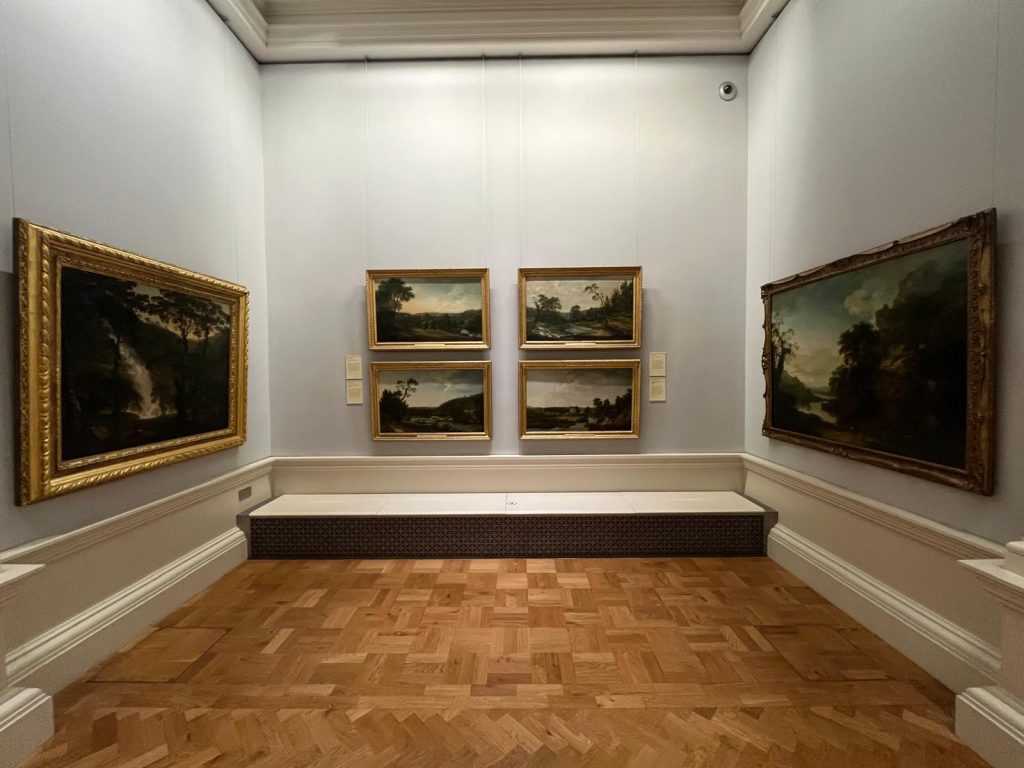
The section dedicated to Irish art between 1670 and 1835 – when the Irish easel painting developed and was strongly influenced by foreign artists who helped improve artistic practice, patronage, and education – shows how artistic production during this period was mainly focused on portraits and landscapes commissioned by noble families to demonstrate their social prestige.
Among these artists, Thomas Roberts stands out, known for his natural landscapes where human figures are often present, engaged in daily activities, creating a harmonious balance between nature and social life.
As Roberts did, many talented Irish artists sought better opportunities abroad, especially in London and other European centres. They followed their patrons on the Grand Tour and adopted major artistic movements of the time, from Classicism to Romanticism
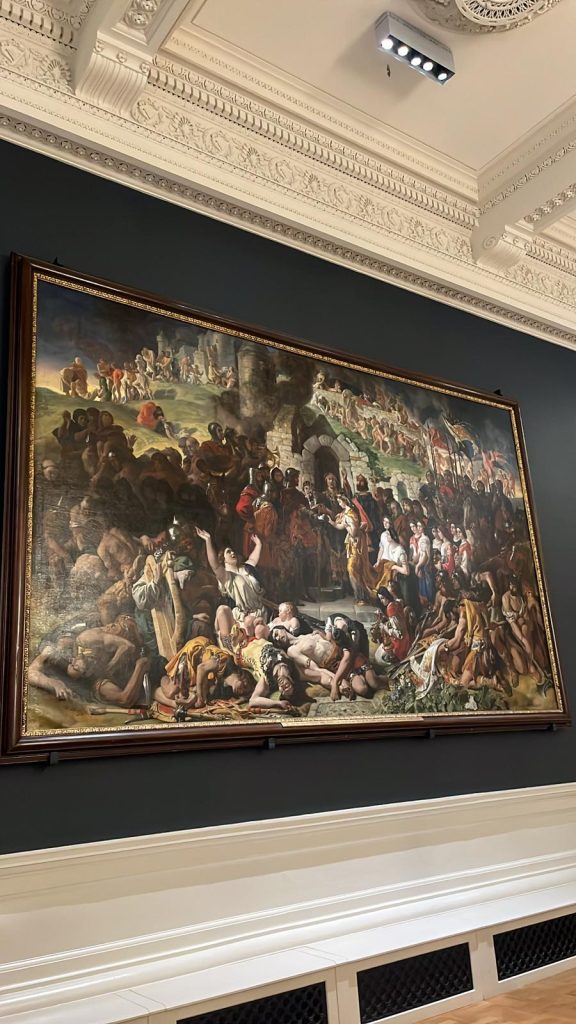
One of the most significant painting that you can find in the museum about the Irish history is the “The Marriage of Strongbow and Aoife” by Daniel Maclise, which represent the start of the English invasion in Ireland and the wedding of the English army general Strongbow and the seventeen-year-old daughter of one of the Irish Kings Aoife, surrounded by the consequences of the invasion, as you can see the city still burning, the people dying and the women being raped.
We thought that this portrait is really touching and impressive because it shows the brutality of this invasion toward Irish civilians, and an important piece of the history of both the nations.
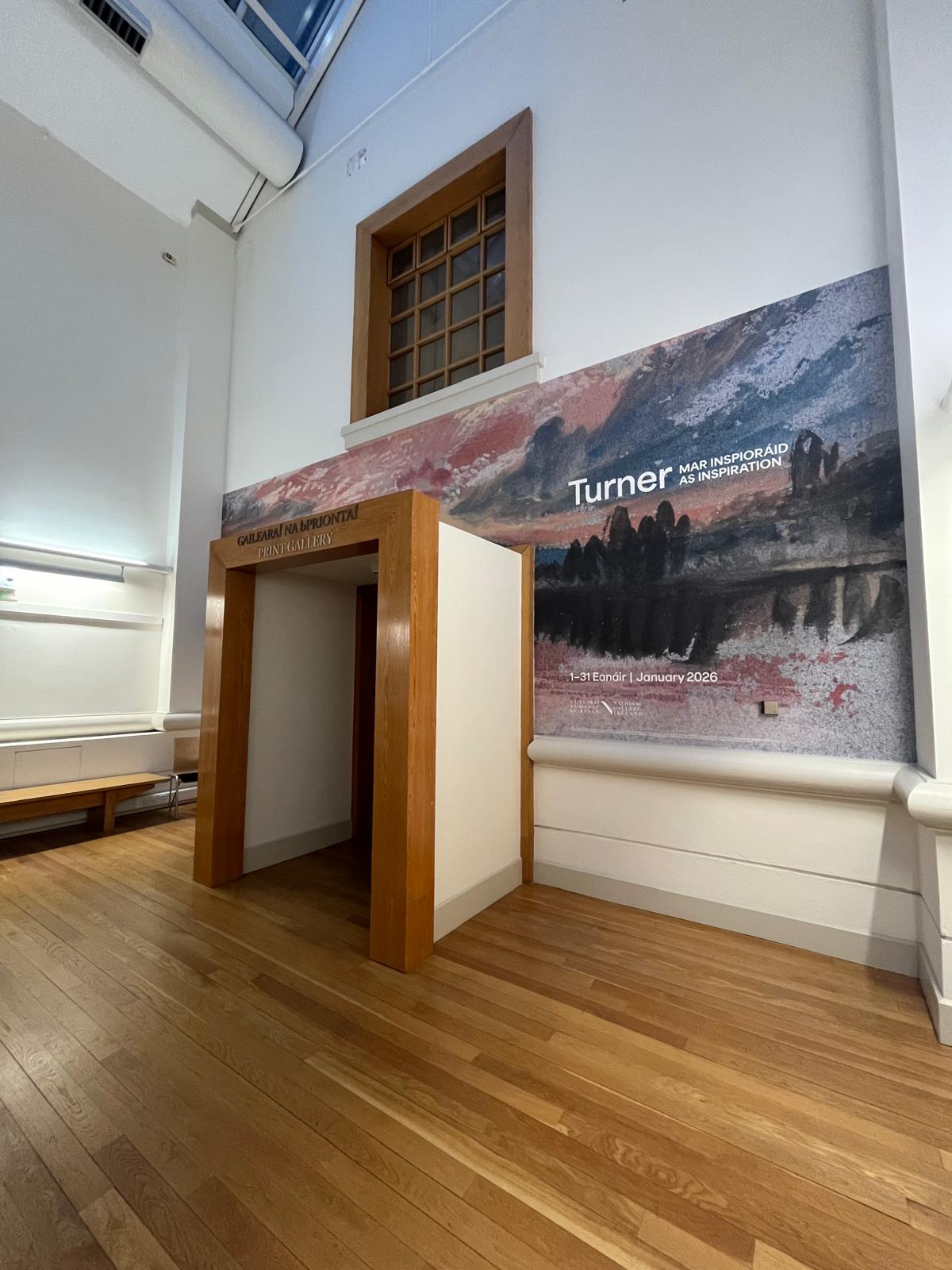
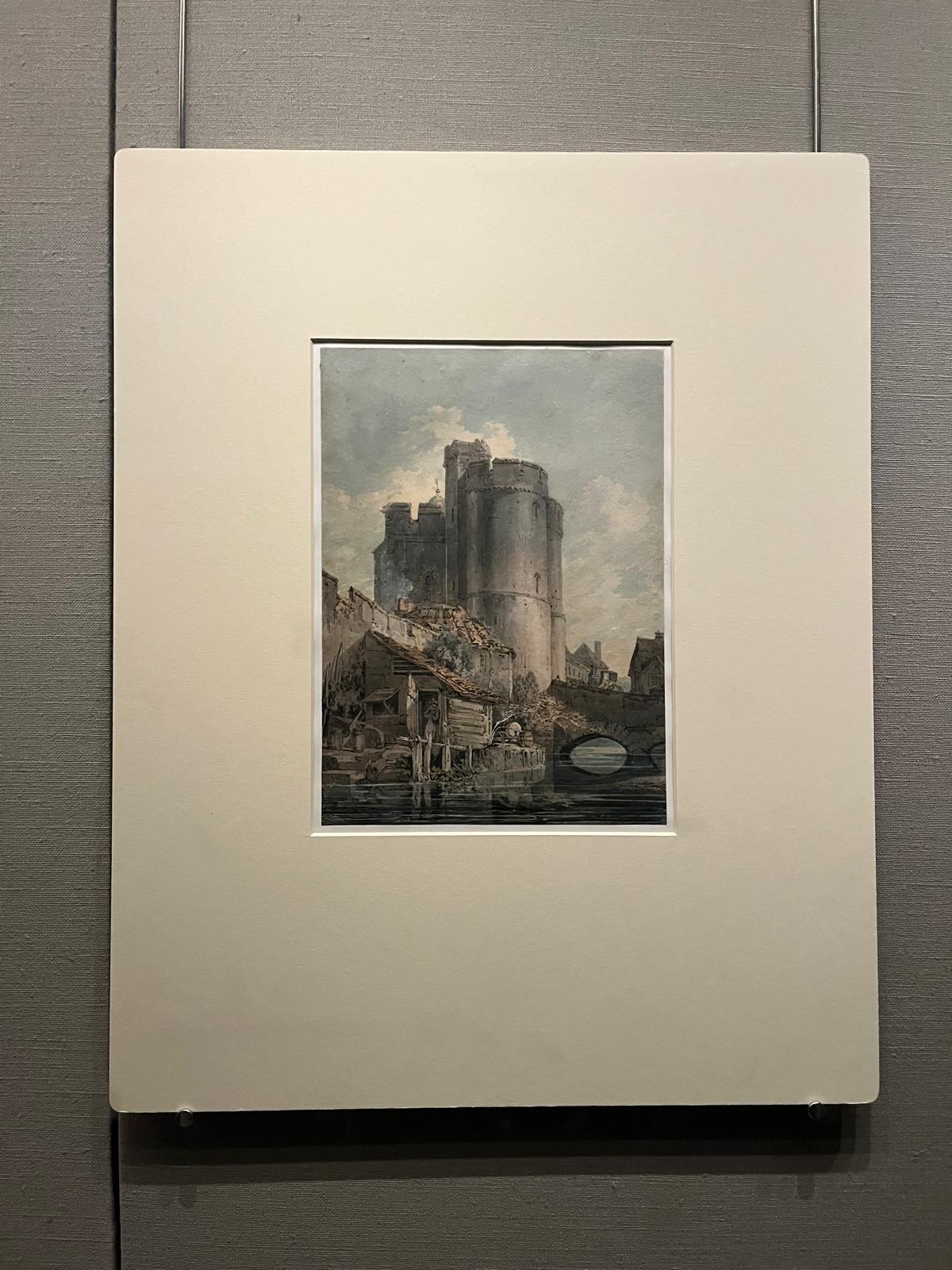
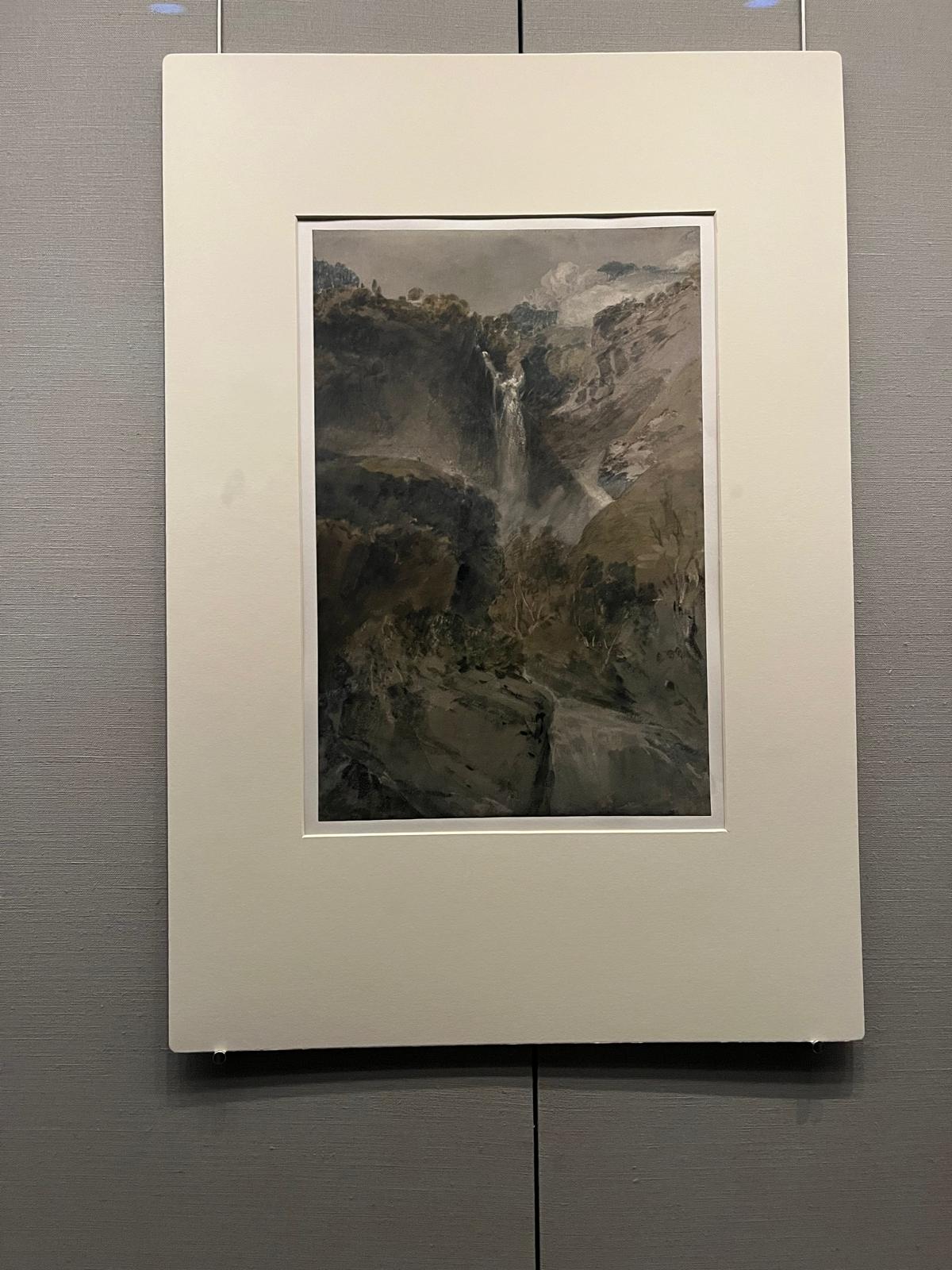
On the second floor, dedicated to the print gallery, it is possible to admire works by J.M.W. Turner, one of the most important English painters, famous for his expressive landscapes and innovative use of light and atmospheric effects. His numerous travels across Europe allowed him to develop a personal style that made him a fundamental figure in the history of landscape painting. For this reason, we were immediately captivated by his works of art, for example “The Great Fall of the Reichenbach” and “The West Gate”.
The journey continues with the section dedicated to European art between 1300 and 1600, which shows the transition from religious icons with gold backgrounds to the Renaissance eventually leading to Mannerism, characterized by elongated figures and exaggerated poses.
Subsequently, 17th-century European art introduced the Baroque, a more dramatic and emotional style with dynamic compositions and scenes rich in intensity.
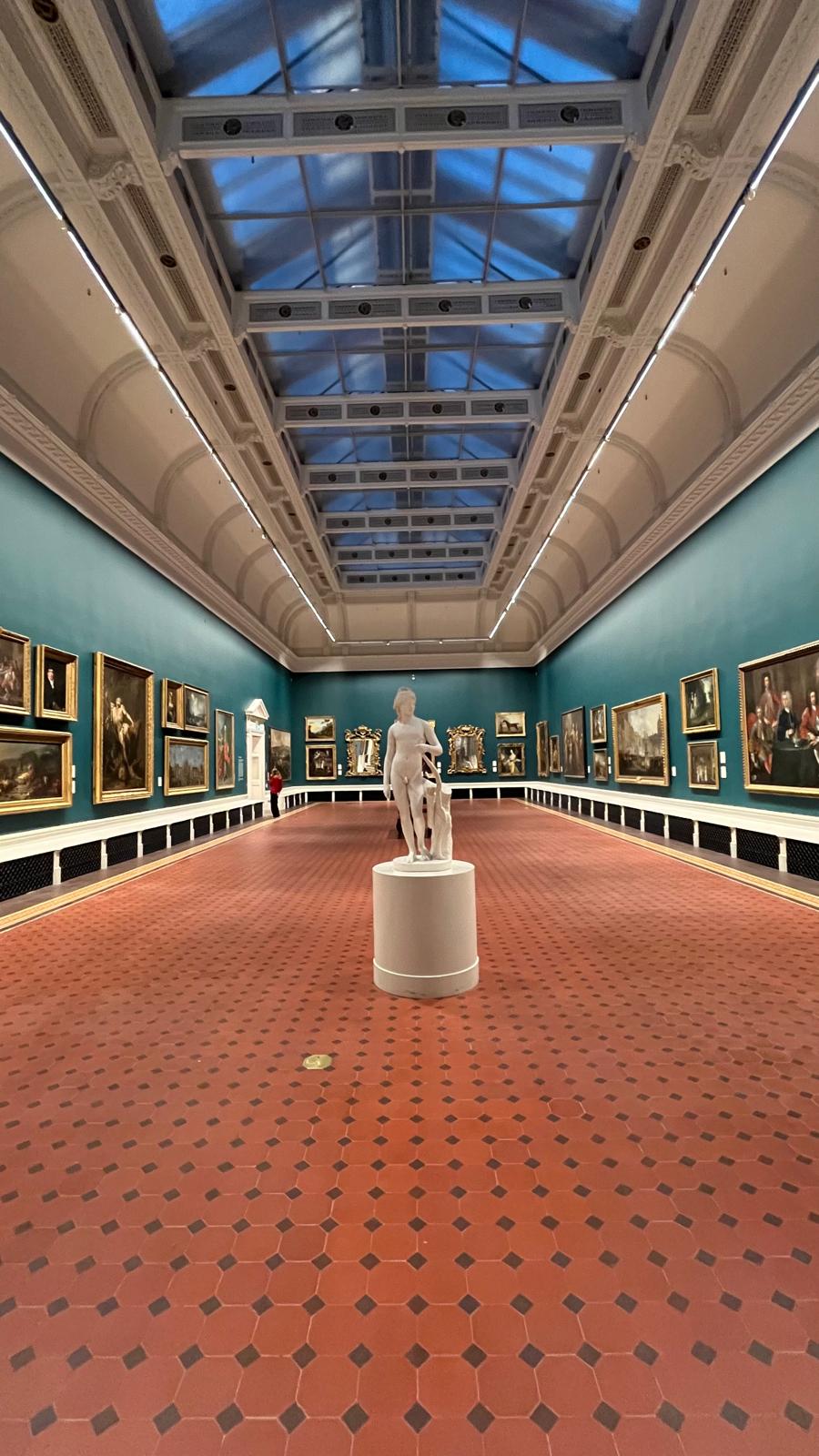
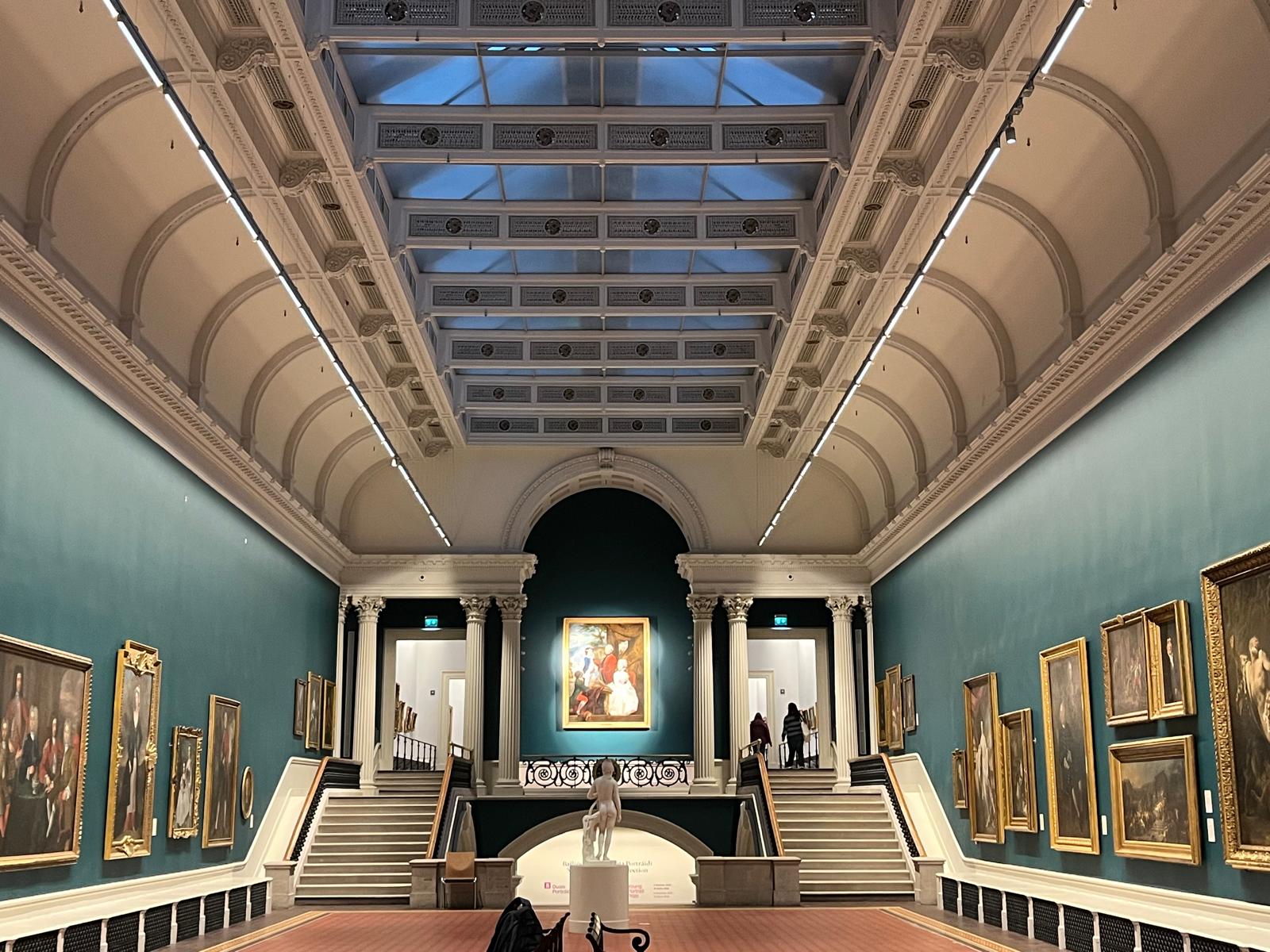
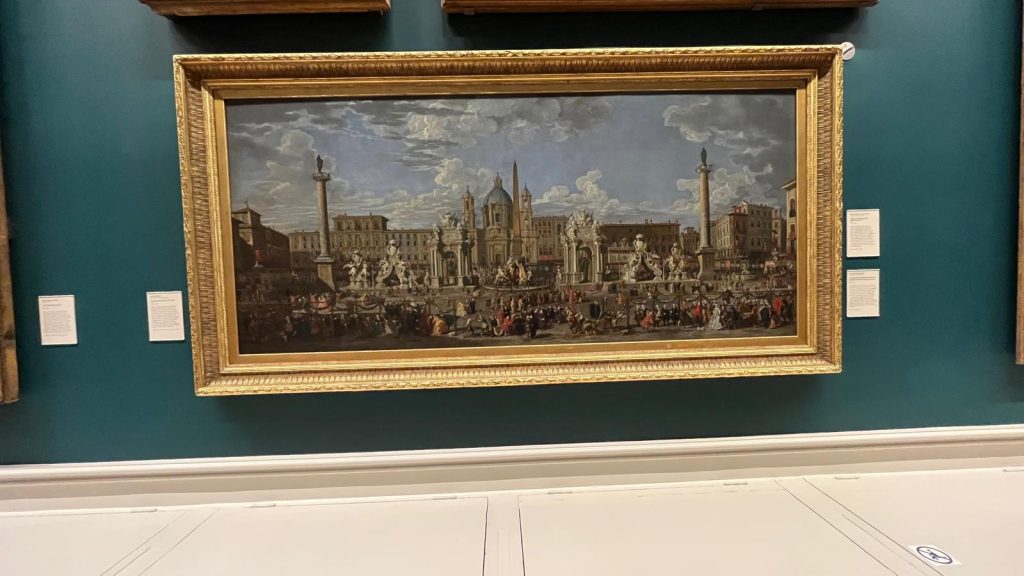
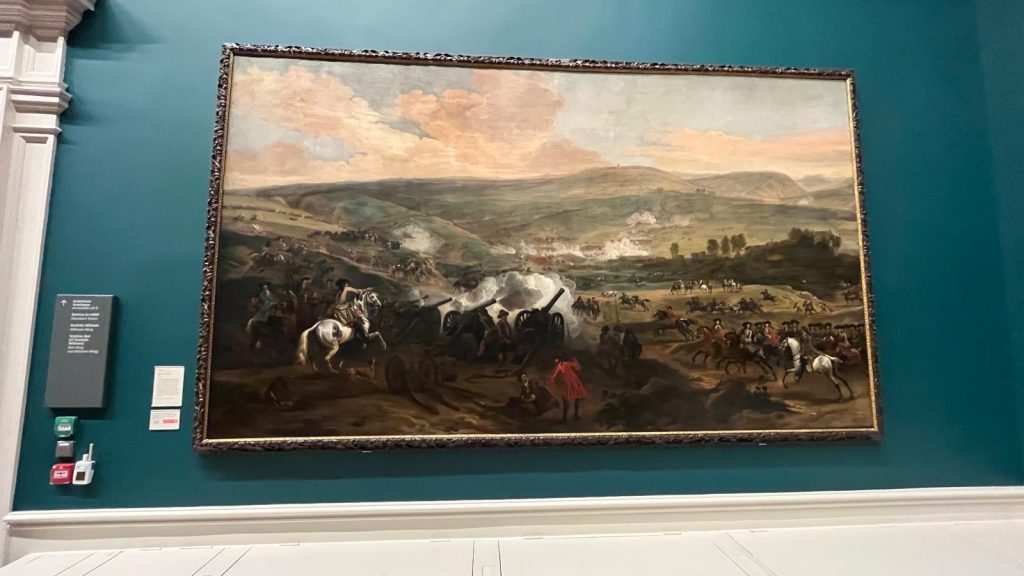
One of the most evocative spaces in the museum is the Grand Gallery, dedicated to the 18th century and the Enlightenment, known as the “Age of Reason,” a period in which art reflected the values of progress, science, and freedom.
Every work exhibited in this room has a direct link to Ireland, through the artist, the subject represented, or the collector.
Finally, the museum also houses a section dedicated to contemporary art, featuring portraits and photographs dating back to the 2000s, demonstrating how art continues to evolve and engage in dialogue with modern society.
Although the National Gallery of Ireland is easily accessible and offers a very rich collection, the organization of the rooms is somewhat unintuitive, as the paths are not always clear and it is often necessary to use a map to find your way.
This aspect makes the visit slightly more complex, but it does not diminish the value of the overall cultural experience, which remains very interesting nonetheless.